Feng Shui Home Tips 2026: Balance Fire Horse Energy
Feng shui home tips 2026 is a guide to balancing the intense energy of the Fire Horse year. By incorporating grounding earth elements, decluttering living spaces, and strategically placing water features, you can harmonize your environment. These essential adjustments help promote stability, reduce stress, and invite prosperity throughout this dynamic lunar cycle.
Why Is 2026 Considered the Year of the Fire Horse in Feng Shui?
In traditional East Asian sexagenary cycles (the 60-year stem-branch calendar system), 2026 marks the arrival of Bính Ngọ, universally known as the Year of the Fire Horse. This specific combination aligns the Heavenly Stem Bính (Yang Fire) with the Earthly Branch Ngọ (which inherently belongs to the Fire element). When these two forces combine, they create an exceptionally concentrated manifestation of energetic heat, expansion, and rapid transformation.
Based on analysis from Numerology Guide (numerology-guide.com).
From a spatial analysis perspective, the Year of the Fire Horse is characterized by heightened ambient volatility, rapid movement of environmental forces, and intense Yang momentum. Historical and spatial traditions curated by institutions like the Smithsonian National Museum of Asian Art highlight how cosmological frameworks reflect physical environmental conditions. In residential architecture, this dynamic translates to an inflation of Yang energy, which can manifest as elevated emotional friction, atmospheric dryness, mental restlessness, and accelerated resource depletion among occupants if the home environment lacks structural balance.
| Cosmological Parameter | Metaphysical Designation | Spatial Impact on Residential Interiors |
|---|---|---|
| Heavenly Stem | Bính (Yang Fire) | Increases ambient heat, intensifies light, speeds up activity nodes |
| Earthly Branch | Ngọ (Horse / Fire) | Encourages movement, rapid structural change, directional volatility |
| Combined Dynamic | Double Fire (Hỏa Tương Trợ) | Elevates risk of burnout, emotional instability, and energetic overstimulation |
Architectural spatial planning in 2026 must account for this macro-level surge. Rather than attempting to introduce more activation elements, interior design strategies must pivot toward stabilizing residential zones, dampening excess heat, and grounding the core layout. Understanding the core cosmological shift of 2026 and how the Bính Ngọ (Fire Horse) energy impacts residential spaces provides the foundational context needed to implement corrective measures throughout your living areas.
How Can You Balance the Intense Fire Energy in 2026?
To counteract the structural volatility of a double-Fire year, spatial remediation relies strictly on the Five Elements Theory (Ngũ Hành). According to the productive and destructive cycles of environmental dynamics, Fire (Hỏa) is naturally absorbed and regulated by Earth (Thổ), exhausted by Metal (Kim), and moderated by Water (Thủy). Introducing these balancing counter-weights prevents household energy from tilting into chaotic over-activation.
To engineer a stabilized microclimate inside the home, apply targeted structural and decorative adjustments based on physical material selection and color spectrum regulation:
- Earth Element Integration (Primary Stabilizer): Use heavy terracotta ceramics, matte clay tile finishes, natural slate, or unpolished granite in high-traffic zones. Earth absorbs excess Fire heat and converts it into grounding stability. Paint palettes incorporating warm beige, taupe, sand, or ochre provide immediate energetic dampening.
- Water Element Application (Moderator): Introduce smooth, meandering water features or reflective surfaces in designated cool sectors. Avoid placing active water features near central hearth zones to prevent elemental clash (Thủy Hỏa Tương Khắc). Utilize deep navy, indigo, or charcoal accents to visually lower environmental temperature.
- Metal Element Deployment (Exhaustion Valve): Incorporate refined brass, cast iron, copper, or matte metallic fixtures. Metal absorbs Earth energy derived from Fire, creating a smooth productive cycle (Hỏa sinh Thổ, Thổ sinh Kim) that neutralizes spatial friction.
Avoid excessive use of vibrant reds, bright oranges, sharp crimson textiles, and pointed triangular furniture geometry in 2026, as these choices directly amplify the ambient Fire dynamic. Practical interior design tips using the Five Elements Theory (Ngũ Hành) to cool down and stabilize the home form the baseline; the next operational priority is ensuring this newly calibrated energy can enter the home cleanly through the main entry portal.
Why Is the Front Door Called the 'Mouth of Chi' (Miệng Khí)?
In spatial bio-energetics and environmental flow modeling, the front entrance functions as the absolute primary threshold for atmospheric intake—traditionally termed the "Mouth of Chi" (Miệng Khí). Every environmental current, light wave, and air circulation stream enters through this portal before distributing through corridors, rooms, and functional zones. If this primary aperture is obstructed, dark, or structurally compromised, incoming vitality deteriorates into stagnant air (Tử Khí) regardless of how well the rest of the home is arranged.
Modern analytical studies into living environments, such as those evaluated by the Faculty of Astrological Studies when examining macro-spatial rhythms, emphasize that entry points act as physical regulators of environmental quality. Maintaining an unobstructed entryway improves natural ventilation, maximizes visual clarity, and lowers physical stress metrics for occupants returning home.
- Clear the Sweep Radius: Ensure the main entrance door swings open to a full 90 to 180 degrees without striking shoes, coat racks, or storage furniture. A restricted door arc physically restricts incoming environmental volume.
- Optimize Threshold Lighting: Maintain an illumination level of at least 100 to 150 lux at the exterior porch and interior foyer. Bright entryways neutralize stagnant shadows and draw high-frequency airflow into the property.
- Eliminate Visual Barriers: Remove dead plants, overflowing shoe piles, broken hardware, or bulky outdoor equipment within a 2-meter radius of the door frame. Clear pathways ensure smooth aerodynamic circulation.
- Maintain Structural Integrity: Fix squeaking hinges, sticky locks, or chipped paint immediately. A malfunctioning entryway introduces subtle micro-stress triggers every time an occupant leaves or enters the building.
Actionable advice on clearing the entryway to welcome auspicious energy without blockages ensures that incoming forces are clean, stable, and ready to nourish the home's interior zones.
How Do Feng Shui Flying Stars (Cửu Cung Phi Tinh) Shift in 2026?
In traditional Xuan Kong Feng Shui, space is not static; it is governed by dynamic temporal patterns known as Flying Stars (Cửu Cung Phi Tinh). As we transition into 2026—the Year of the Yang Fire Horse (Bính Ngọ)—the annual energy chart recalibrates across the nine compass sectors of your home. Understanding these spatial shifts allows you to map out high-frequency zones and mitigate environmental stressors before they manifest as fatigue, conflict, or stagnation.
According to cultural archives preserved by the Smithsonian National Museum of Asian Art, spatial alignment techniques like Flying Stars have historically served as sophisticated frameworks for harmonizing built environments with seasonal cycles. In 2026, the dominant energetic theme centers around the Fire element, amplifying the characteristics of whichever star occupies a given sector.
| Compass Sector | Annual Flying Star | Energetic Element | Spatial Impact & Focus |
|---|---|---|---|
| Center | Star 1 (Greedy Wolf) | Water | Academic success, career mobility, emotional intelligence. |
| South | Star 6 (Military Star) | Metal | Authority, discipline, career promotion; requires grounding. |
| Northwest | Star 9 (Future Prosperity) | Fire | Wealth creation, long-term investments, life transitions. |
| Northeast | Star 7 (Broken Soldier) | Metal | Communication mishaps, potential financial leakage, dispute risks. |
| Southwest | Star 5 (Yellow Misfortune) | Earth | Severe instability; demands quietude and zero construction. |
To optimize your layout, identify key operational zones within your home floor plan:
- The Northwest Sector (Star 9): In Period 9 (2024–2043), Star 9 acts as the primary wealth energy. In 2026, activating this zone with high-frequency natural light, functional workspaces, or warm-toned accents enhances professional momentum.
- The Southwest Sector (Star 5): Representing volatile Earth energy, the Southwest requires strict stabilization. Avoid structural renovations, heavy drilling, or bright red lighting here. Neutralize this sector using heavy metal objects, such as solid brass or copper decor, to absorb incoming tension.
- The Center Sector (Star 1): Located in the heart of the home, this Water star governs communication and clarity. Keep the central floor plan unobstructed to facilitate an even distribution of ambient air and light throughout adjacent rooms.
While tracking annual star movements provides a structural blueprint for interior organization, no spatial remedy can function effectively if physical pathways are obstructed. Navigating the annual energy shifts across different compass sectors of your home brings us directly to the foundational medium through which all environmental energy flows: the physical state of your physical belongings.
What Impact Does Clutter Have on Your Home's Prosperity?
From an Environmental Psychology and Feng Shui perspective, physical clutter represents stagnant energy (Sheng Chi turning into Si Chi or Sha Chi). When a living space is saturated with unorganized, broken, or unused items, air circulation drops, natural light reflection decreases, and cognitive friction increases. The psychological and energetic impact of hoarding creates a baseline of chronic low-grade stress, directly draining the vitality required to seek new opportunities and manage household wealth.
When you reduce physical obstacles, you directly improve the environmental quality of your home. Studies in indoor air quality show that minimalist, clutter-free rooms contain lower concentrations of trapped particulate matter and dust mites, leading to measurable improvements in daily respiratory health and cognitive focus.
To execute an evidence-based decluttering protocol that supports home prosperity in 2026, apply the following systematic rules:
- The Broken-Item Mandate: Discard or repair broken appliances, chipped ceramics, and non-functional clocks immediately. In classical symbolism, non-working items represent suspended progress and financial leaks.
- Clear the Flow Corridors: Ensure all main hallways and transitional pathways maintain a minimum clearance width of 36 inches (approx. 90 cm). Obstructed hallways slow down personal movement and restrict airflow between living zones.
- Systematic Paper and Digital Pruning: Expired contracts, piled mail, and neglected receipts resting on desks create visual noise. Clear workspace surfaces at the end of each working day to maintain psychological readiness for daily tasks.
- Ventilation Cycle Protocols: Combine physical decluttering with air exchange. Open main windows and interior doors for 9 to 15 minutes every morning. This practice purges accumulated indoor carbon dioxide and introduces fresh, oxygen-rich air into the environment.
Eliminating physical waste acts as the ultimate Feng Shui remedy because it costs nothing yet immediately alters the biological and perceptual quality of your home. Once physical energy moves freely through uncluttered corridors, you must direct your attention to the most critical sanctuary of personal regeneration. Bedroom layout strategies to ensure stability, avoid direct door alignment, and promote deep sleep form the core of personal vitality in 2026.
Where Is the Best Position for Your Bed in 2026?
In spatial design, the bedroom governs personal recovery, immune health, and emotional balance. Because adults spend roughly one-third of their lives in bed, the layout of this room directly dictates how effectively your nervous system downregulates during rest. In 2026, as high-intensity Fire energy dominant outside demands greater emotional composure, placing your bed in a stabilized "Commanding Position" becomes paramount.
Historical research into spatial orientation published by the Faculty of Astrological Studies illustrates that humans consistently seek interior arrangements that balance sightlines with physical enclosure—a principle that mirrors modern evolutionary architecture.
To align your sleeping space for maximum stability and restorative rest, adhere to these structural layout guidelines:
- The Commanding Position Rule: Position your bed so that you can clearly see the bedroom entry door while lying down, without being in direct linear alignment with it. This setup reduces subtle psychological hypervigilance, allowing the parasympathetic nervous system to fully engage.
- Solid Wall Support: Anchor the headboard firmly against a solid, load-bearing wall. Avoid placing the head of the bed directly under a window, which exposes the sleeper to light pollution, temperature fluctuations, and acoustic disturbances.
- Eliminate Overhead Threats: Ensure your sleeping zone is free from heavy overhead hazards, such as exposed ceiling beams, heavy hanging chandeliers, or bulky ceiling fans positioned directly above the torso. These structures create subconscious compression forces that disrupt deep REM cycles.
- Symmetrical Bedside Spatial Allowance: Maintain clear walking space on both sides of the bed (ideally at least 24 inches or 60 cm). Pair this with matching nightstands to foster balance, clear movement, and visual symmetry.
- Mirror Positioning Precautions: Position full-length mirrors so they do not reflect the bed directly from the sleeping angle. Reflected light and movement caught in peripheral vision trigger unexpected startle responses during light sleep stages.
By establishing physical security and visual order in the bedroom, you protect your vital energy from the fast-paced Fire element of 2026. Once personal rest is secured in the bedroom, the next vital system to evaluate is the primary engine of household vitality and nutritional balance: the kitchen layout.
How Does Kitchen Layout Affect Health and Wealth in Vietnamese Feng Shui?
In Vietnamese cultural architecture, the kitchen (Nhà Bếp) serves as the metabolic engine of the household. It represents the primary nexus where raw resources are converted into physical sustenance, directly influencing both physiological health and financial stability. Within traditional spatial metaphysics, the kitchen is governed by the Fire element (Hỏa), making its structural alignment critical to maintaining internal thermodynamic equilibrium within the living space.
The core empirical challenge in kitchen layout optimization involves managing the elemental opposition between Fire and Water (Thủy). The stove acts as an active Hỏa generator, while the sink, refrigerator, and drainage networks operate as dominant Thủy features. Placing the cooktop directly adjacent to or immediately opposite the sink creates a destructive dynamic known as Thủy Hỏa Tương Khắc (Water-Fire Conflict). Architectural analysis indicates that maintaining a spatial buffer of at least 60 centimeters (approximately 24 inches) between these two zones stabilizes localized thermal and spatial vectors, reducing both visual friction and physical risk during culinary activities.
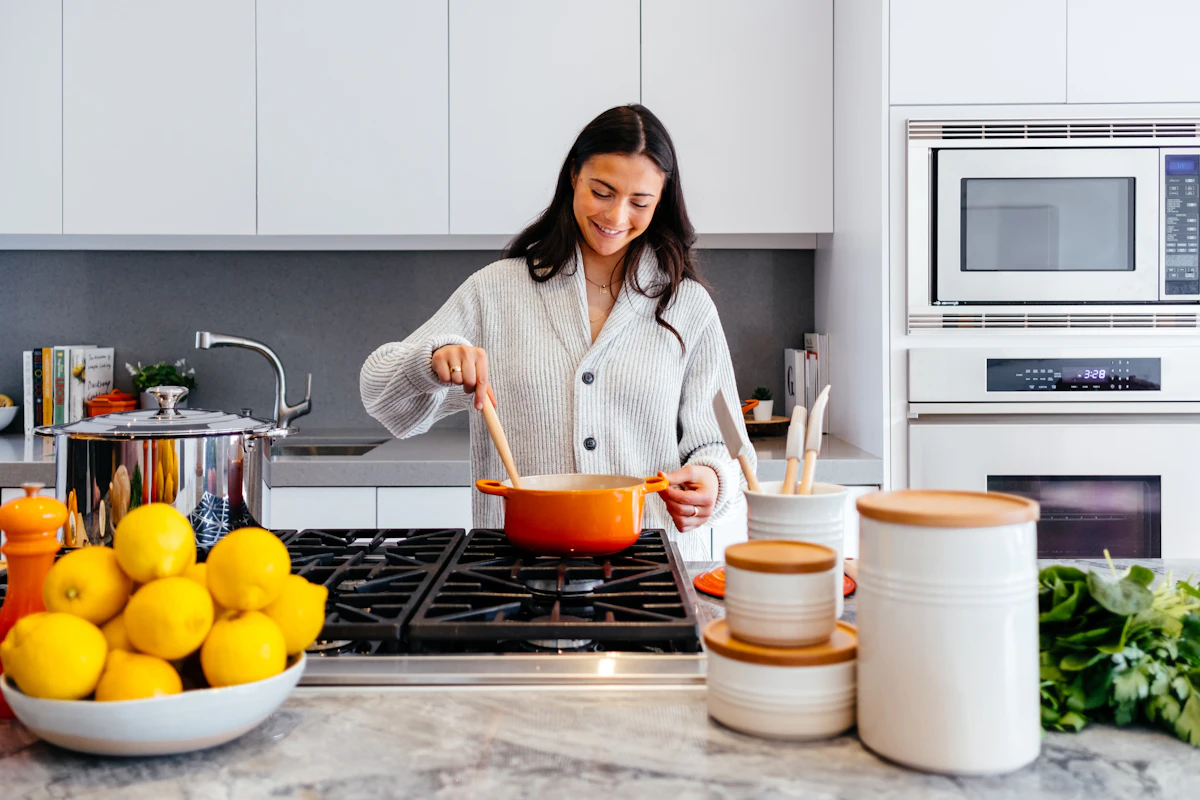
Furthermore, structural positioning dictates the flow of environmental quality throughout the house. A kitchen positioned directly visible from the main entrance permits volatile cooking fumes, particulate matter, and heat to disperse directly into the primary living spaces, disrupting air quality balance. Similarly, aligning the kitchen doorway directly across from a bathroom introduces elevated moisture levels and bacterial risks into the food preparation zone. To secure optimal structural stability in Vietnamese home design, consider these three structural parameters:
- Commanding Backrest (Tựa Sơn): The stove must rest against a solid, structural wall rather than a window or floating partition, symbolizing long-term financial backing and systemic physical stability.
- Airflow Neutralization: Avoid direct linear alignment between the stove and major external doors. High-velocity drafts destabilize gas flames or unevenly distribute thermal currents, leading to inefficient resource usage.
- Subdued Earth Intermediaries: Use neutral, mineral-based materials such as quartz, terracotta, or ceramic tiles between water features and cooking units. Earth (Thổ) absorbs excess Fire while regulating Water, creating a harmonious sequence: Fire → Earth → Metal → Water.
While structured spatial geometry in the kitchen maintains internal metabolic health, external environmental factors such as sunlight and biological life dictate the overall atmospheric quality of the broader household.
Why Are Natural Light and Healthy Plants Crucial for 2026?
Modern architectural psychology and classic spatial principles intersect seamlessly in the domain of indoor environmental quality (IEQ). In the context of the intense Fire Horse energy of 2026, natural light optimization and controlled biophilic elements act as passive thermoregulators, preventing atmospheric stagnation and stabilizing indoor volatile organic compounds (VOCs).
Light is the primary physical catalyst of Chi (vital environmental energy). Insufficient solar radiation leads to an accumulation of cold, stagnant conditions (excess Âm/Yin), which correlates with lower metabolic rates and diminished psychological motivation among occupants. Conversely, excessive, unmediated solar exposure creates an aggressive heat load (excess Dương/Yang). Research archived by the Smithsonian National Museum of Asian Art highlights how historical Asian architectural traditions carefully calibrated natural light using courtyard screens and directional orientations to maintain harmonious indoor environments.
Biophilic design integrates living botany to manage environmental dynamics. Healthy indoor plants absorb excess carbon dioxide, release oxygen, and regulate ambient humidity. In 2026, selecting specific plant species allows homeowners to modulate spatial energy systematically:
| Plant Species | Elemental Association | Primary Feng Shui Function | Ideal Placement Zone |
|---|---|---|---|
| Jade Plant (Crassula ovata) | Wood / Earth | Stabilizes wealth sectors; regulates excess heat | Southeast or East living room |
| Snake Plant (Sansevieria trifasciata) | Wood / Metal | Filters airborne toxins; provides protective structural energy | Entryways or home office corridors |
| Peace Lily (Spathiphyllum) | Water / Metal | Transpires moisture; balances intense Fire energy | Southwest or West activity areas |
| Pachira Aquatica (Money Tree) | Wood | Encourages progressive growth; balances linear airflow | Bright, indirect light near workspace |
To maximize indoor air quality, maintain a daily ventilation routine by opening perimeter windows for 9 to 15 minutes during early morning hours. This simple action replaces stale indoor air masses without overheating structural interiors. Ensure all indoor foliage remains robust and free of decay; dying leaves generate decomposing organic material that degrades both air quality and environmental balance.

While environmental balance provides a stable foundation for any living space, aligning these spatial structures with your personal energetic blueprint delivers a truly customized living environment.
How Does Your Numerology Life Path (Thần Số Học) Influence Home Design?
Spatial optimization reaches its full potential when environmental design is aligned with individual energetic profiles. In Vietnamese holistic practices, integrating Thần Số Học (Numerology) with spatial arrangements creates a tailored framework for residential design. By calculating your Life Path Number (Chỉ số Đường Đời), you can customize interior layouts to support your core physical and psychological traits.
Analytical traditions, such as those studied at the Faculty of Astrological Studies, demonstrate how symbolic archetypes provide structured systems for self-understanding and personal development. Applying your primary Life Path number to interior design helps refine material selections, spatial configurations, and color palettes to complement your personal profile:
Life Path 1, 8, and 9 (High-Output Archetypes): These numbers are characterized by strong leadership, ambition, and intense output. Living spaces should prioritize open floor plans, minimal visual clutter, and grounding elements like solid wood or matte stone. Neutral, calm palettes help absorb excess stress and maintain mental clarity.
Life Path 2, 3, and 6 (Relational and Expressive Archetypes): Individuals with these numbers thrive in environments that foster communication, creativity, and social connection. Living areas benefit from soft, curved furniture arrangements, natural textiles, and collaborative seating configurations that encourage open interaction.
Life Path 4, 5, and 7 (Analytical and Dynamic Archetypes): These numbers require structured, adaptable environments that support focus, flexibility, and deep reflection. Dedicated study zones, modular shelving systems, organized lighting, and dedicated quiet areas help maintain focus and emotional stability.
To implement this synthesis effectively, use your Life Path number to direct design choices in primary personal zones, such as the home office or master bedroom suite. By aligning these personal spaces with your profile while keeping common areas balanced for all household members, you create an environment that supports individual focus, wellness, and long-term personal stability.
Get a free analysis
Leave your info to receive a detailed analysis
Your information is kept completely confidential